Spider Solitaire - puzzle trip
- 4.6
- Rating
- 100.00K
- Installs
- Free
- Price

 Analysis by App-foxy
I approached Spider Solitaire - puzzle trip as the kind of card game I could open for a few quiet minutes, rather than something that demands a long session. That distinction matters here. It is a free solitaire game from Small ant limited, built around a familiar card format with a more playful presentation than the plain digital decks many people already know. After spending time with it, I found its main appeal in the simple rhythm: start a deal, look for the next useful move, clear a sequence, and decide whether to continue or take a break.
The game has a 4.7 average from around 4.8 thousand ratings, which gives it a strong first impression among people who have tried it. It is also listed with over 100 thousand installs, so it is not an obscure experiment with no visible audience. Still, those figures do not replace personal preference. Spider Solitaire is a patient, pattern-focused game, and its value depends on whether you enjoy thinking through card arrangements without needing fast action or a complicated story.
How it feels in everyday play
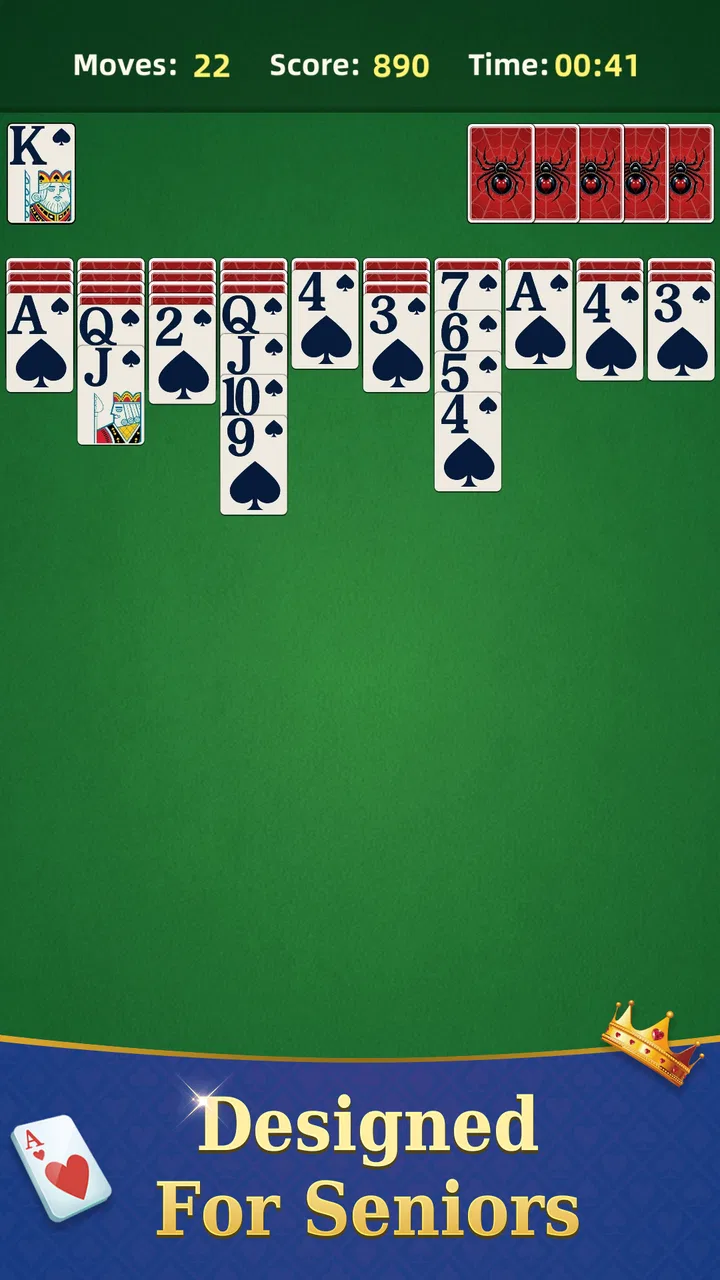
I find the everyday appeal comes from how little setup the card puzzle needs: I can start with the layout in front of me and spend my attention on choosing a move, not learning a complicated routine. A useful habit is to pause after uncovering a card and reassess the whole board before committing to the next sequence. That makes even a brief round feel considered, and it leads naturally to the question of what keeps the play engaging beyond the first deal.
You May Also Like

 Blood Strike: 2.5 Anniversary
Blood Strike’s Loadouts Turn Every Drop Into a Tactical Gamble
A close look at Blood Strike’s custom loadouts: how fast access to signature weapons reshapes its battle royale rhythm, rewards preparation, and narrows the gap between fights.

 Pandora - Music & Podcasts
Pandora’s Music Is Easy to Start, but Harder to Recover
Pandora’s strength is its low-effort path from a seed to a station. Its weak spot is how much confidence it asks you to place in connection, setup, and quiet recovery.

 8 Ball Pool
 Is Built on Rivalries, Rematches, and Routine
A close look at the rivalries, rematches, shared routines, and unanswered safety questions that turn a quick pool match into a persistent mobile community.

 Samsung Music
’s Quiet Strength Is Playing What You Already Own
Its reach comes less from spectacle than from dependable access to a personal library. That simplicity is both the app’s strongest retention engine and its ceiling.

 AccuWeather: Weather Radar
AccuWeather Review: A Quick, Clear Forecast for Everyday Decisions
For everyday plans, the best forecast is the one you can understand quickly. AccuWeather makes rain timing, radar, and local conditions easy to act on, with a few trade-offs.

 Hill Climb Racing
Why Hill Climb Racing Still Turns Crashes Into One More Run
A tiny car, a bumpy hill and one more upgrade: Hill Climb Racing keeps resurfacing because its simple chaos makes every near-miss feel personal.
More From Our News Desk
View All News


A calm start with a familiar learning curve
The basic idea is easy to understand if you have played solitaire before: arrange cards in descending order, uncover hidden cards, and work toward clearing the layout. The spider format adds more planning than the simplest one-deck versions because a move that looks helpful now can make the remaining columns awkward later. I like that tension. It gives each deal a small puzzle identity instead of making every round feel like a routine tap-through exercise.
For a new player, the first few rounds are approachable because the card logic is recognizable. The challenge is not learning a large set of rules; it is learning to pause before moving a sequence. I found that the most useful habit is to ask which move exposes a hidden card, not merely which move creates the longest visible run. That small change in thinking makes the game more rewarding and is one of the reasons I would recommend it to someone who wants a light brain teaser rather than a reflex game.
The store summary presents the experience as a combination of classic and creative solitaire, and that description is more meaningful in practice than it might first sound. The classic side is the dependable card-puzzle loop. The creative side gives the package a less austere personality than old-fashioned desktop solitaire. I would not choose it expecting a deep role-playing adventure, but I did appreciate that the presentation aims to make repeated deals feel like part of a broader trip instead of an endless identical table.
Speed expectations on an ordinary phone
From a player’s point of view, this is the sort of game that should feel comfortable for short openings: waiting in a queue, taking a break between tasks, or winding down before bed. The card format does not require rapid reactions, so perceived speed is mainly about how quickly a deal becomes available and how smoothly the board responds to taps and drags. In my experience, the important quality is not spectacular animation speed but whether the interface stays out of the way while I am calculating my next move.
That makes the game a good match for people who dislike overloaded menus. Solitaire players usually want to see the layout immediately, understand the available move, and continue without navigating through several layers. I found the experience most satisfying when I treated it as a focused puzzle: make a move, inspect the newly exposed card, then reconsider the whole arrangement. The pace naturally slows during difficult positions, but that is thinking time rather than a performance problem.
There is also a practical advantage to a card game over a visually intense action title. A typical round does not ask the device to maintain a constantly changing world, and the player is not punished for taking a few seconds to study the columns. That makes this a sensible choice for an older compatible phone or for someone who values a relaxed interface. I would still avoid judging performance from the opening screen alone; the real test is how comfortable the board remains after repeated deals and longer sessions.
What happens during heavier use
The moments most likely to reveal friction are not individual card moves but extended use. If I play several rounds in succession, I pay attention to whether the board remains readable, whether repeated taps register as expected, and whether the surrounding presentation begins to feel more distracting than the puzzle itself. Solitaire is deceptively demanding from a design perspective because a tiny interruption can make a player forget the intended sequence or lose track of which column was being planned.
My advice is to use deliberate gestures rather than hurried tapping when a column contains several linked cards. In a spider puzzle, moving a sequence too quickly can be mentally costly even when the game accepts the action correctly. I prefer to pause after a significant move, especially when it exposes a new card or opens an empty space. That workflow reduces mistakes and makes the game feel more stable because I am not confusing my own rushed input with a problem in the app.
For people who play while multitasking, the experience has a trade-off. The rounds are easy to understand, but the puzzle state still deserves attention. If you are listening to a meeting, switching between messages, or repeatedly locking the screen, this may not be the best moment for a difficult deal. A simpler matching game can be more forgiving when your focus is divided. Spider Solitaire works better when you can give the layout a minute of uninterrupted thought, even if the total session is short.
Reliability and recovering a session
One question I always have with a casual game is what happens when real life interrupts. A phone call, a low-battery warning, or an accidental trip to the home screen can break the rhythm of any puzzle. With this type of game, I recommend treating the current deal as something to finish when convenient rather than assuming every interruption will preserve the exact moment you left. That is a useful mindset for any mobile card game and prevents a casual round from becoming frustratingly important.
The safest recovery habit is simple: before closing the app deliberately, finish a natural move or note which column you were working on. That is especially helpful in a complex arrangement where several possible sequences are open. If you return and need a moment to reorient yourself, scan for hidden cards and empty spaces first, then rebuild your plan. This is not a glamorous feature, but it is a practical way to make interrupted play less annoying.
I also prefer to keep expectations realistic about reliability. A card game can feel dependable because its rules are straightforward, yet reliability includes the entire experience: opening the app, entering a deal, maintaining legible cards, and letting the player recover mentally after a pause. The cleanest sessions are those in which the game remains a quiet tool for concentration. If you want a title that automatically carries a long narrative across interruptions, this is not the category I would choose.
Device limits and compatibility
The game supports Android devices running version 7.0 or later, which makes it accessible to people who have kept an older phone rather than upgrading every year. That is a meaningful strength for a lightweight card title. You do not need a recent flagship simply to enjoy a familiar solitaire board, and the broad compatibility makes it easier to recommend to family members who use older Android hardware.
At the same time, compatibility is not the same as identical comfort on every device. Screen size, touch accuracy, text scaling, and the general condition of a phone can change how pleasant card placement feels. On a small or aging display, crowded columns may require more careful tapping, particularly when several cards overlap. I would choose a larger screen if you want to study positions for long periods, while a compact phone is perfectly suitable for quick, casual rounds.
Resource demands are another reason this game may suit older hardware better than a modern action game. The central activity is a card layout rather than a large three-dimensional environment, so the workload should be modest in normal play. Even so, I would not promise identical battery behavior across devices, because brightness, background activity, system health, and other apps can matter more than the card table itself. If your phone is already struggling with storage or general responsiveness, the limitation may be the device rather than this particular game.
Free access and the purchase decision
The game is free to download, which lets you test the card style and pacing before deciding whether it belongs in your regular rotation. There are in-app purchases priced from $4.99 to $10.99 per item. I see that as a reason to spend time with the free experience first. If you only want an occasional solitaire round, paying for extras may not add enough value. If you return often and find the broader presentation keeps the classic format fresh, you can make that decision based on actual use rather than the promise of a store page.
I would be particularly cautious about purchases if you are installing the game for a child. The content rating is Everyone, which makes the basic audience broad, but an age rating does not mean every purchase decision should be left to a young player. For a shared family device, I would set expectations before handing it over. The game is suitable as a general card puzzle, yet the optional spending is still worth keeping in mind when several people use the same phone or tablet.
There is also a psychological trade-off in free casual games. A purchase can make sense when it removes a genuine annoyance or supports a title you use frequently, but it should not be necessary to justify downloading the app. My recommendation is to play enough ordinary rounds to decide whether the core loop itself holds your attention. If the cards are not enjoyable without extras, additional content will not fix that fundamental mismatch.
Who will enjoy it most
I think this is a strong fit for someone who likes traditional card puzzles but wants a friendlier, more decorative setting than a bare-bones solitaire utility. It suits players who enjoy planning several moves ahead, spotting opportunities in a crowded layout, and accepting that some deals need patience. It is also useful as a low-pressure mental break: you can play for a short time, stop after a completed sequence, and return later without needing to remember a complicated control scheme.
A realistic everyday scenario would be a commuter opening it after arriving early for an appointment. Instead of scrolling through social media, I could play one deal, focus on the columns, and stop when my name is called. Another good use is a quiet evening when I want something more engaging than watching short videos but less demanding than a competitive game. The lack of frantic timing makes it suitable for those moments when concentration is welcome but intensity is not.
It is less suitable for players who need constant novelty, direct competition, or a strong sense of progression outside the card board. If your favorite mobile games are built around fast rounds, multiplayer pressure, or elaborate stories, the measured spider format may feel repetitive. I would also steer away from it if you find solitaire frustrating when a deal becomes difficult. A more forgiving one-deck variant can be a better alternative for pure relaxation, while a competitive card game is preferable if you want opponents and immediate stakes.
How it compares with familiar alternatives
Compared with a basic solitaire app that focuses only on a single, plain layout, this game feels more like a themed leisure experience. The advantage is atmosphere and a stronger sense that repeated play is meant to be enjoyable, not merely functional. The cost of that approach is that players who want the fastest possible route from launch to cards may prefer a minimalist alternative with fewer surrounding elements.
Compared with free web solitaire, the mobile format is more convenient for a dedicated short session because the game is designed around touch interaction and a phone-sized screen. A browser option may be better when you are already working at a computer or want to avoid installing another app. On the other hand, a physical deck remains superior for social play, teaching someone face to face, or taking a break from screens altogether. This title is specifically strongest when you want a private, portable puzzle.
Compared with a more competitive digital card game, it is gentler and more self-contained. You are not relying on another player’s schedule or trying to react under pressure. That makes it easier to fit into daily life, but it also means the motivation has to come from the puzzle itself. I found that the most satisfying sessions were not the ones where I rushed to finish, but the ones where I recognized a better sequence after initially overlooking it.
Current version and long-term appeal
The current version is 2.17.1, and the game was released on June 19, 2025. Those details place it as a relatively recent option rather than an old card title that has simply remained unchanged for years. For a prospective player, the more important question is whether the current presentation matches your habits. A recent release can be appealing, but longevity will depend on whether you enjoy returning to the same underlying puzzle structure.
My own test for long-term appeal is simple: after learning the basic flow, do I still want to inspect one more deal? This game has a chance of passing that test for players who enjoy incremental improvement. You can become better at protecting empty spaces, exposing hidden cards, and avoiding moves that look attractive but reduce future options. Those skills give the familiar format more depth than its simple controls suggest.
However, I would not call it an endlessly varied experience for everyone. If you need a new mechanic every few minutes, the repetition may become noticeable. The right way to approach it is as a dependable puzzle companion, not as a replacement for every other type of mobile entertainment. That expectation makes the strengths clearer and keeps the limitations from feeling like surprises.
My performance verdict
After considering speed, extended play, interruptions, and older-device compatibility, I see Spider Solitaire - puzzle trip as a sensible choice for calm, portable card gaming. Its biggest strength is the balance between familiar rules and a more inviting presentation. The game gives solitaire fans enough planning to stay mentally involved without turning every round into a stressful contest.
I would download it if I wanted a free game for short breaks, preferred thoughtful moves over reflexes, and used an Android device running 7.0 or later. I would skip it in favor of a minimalist solitaire app if instant simplicity mattered more than presentation, or choose a competitive card title if I needed opponents and pressure. The optional purchases also mean I would try the free experience first and decide only after I knew the core loop suited me.
My final recommendation is positive but specific: this is best for players who want a quiet puzzle that rewards planning rather than speed. Small ant limited has taken a familiar card format and given it enough personality to feel more welcoming than a plain utility. It is not the right answer for every kind of player, but for an everyday mental break on a compatible Android phone, it offers a comfortable balance of accessibility, concentration, and repeatable play.
FAQs for Spider Solitaire - puzzle trip
01What is Spider Solitaire - Puzzle Trip and how does it differ from classic Solitaire?
Spider Solitaire - Puzzle Trip is a modern twist on the traditional Spider Solitaire game, offering a fresh and engaging experience. Unlike classic Solitaire, this version includes multiple levels and unique challenges that keep players engaged. It features a variety of difficulty modes and visually appealing graphics, making it suitable for both beginners and seasoned players.
02Is Spider Solitaire - Puzzle Trip suitable for all ages?
Yes, Spider Solitaire - Puzzle Trip is designed to be family-friendly and suitable for all ages. The game’s intuitive interface and adjustable difficulty levels make it accessible for younger audiences, while still offering challenges that can engage older players. It’s a great way to improve concentration and strategic thinking skills in a fun environment.
03Are there any in-app purchases or ads in Spider Solitaire - Puzzle Trip?
Spider Solitaire - Puzzle Trip is free to download and play. However, like many mobile games, it offers in-app purchases that can enhance the gaming experience, such as additional hints or removing ads. The game does contain ads, but there is usually an option to remove them through a one-time purchase for an uninterrupted experience.
04Can Spider Solitaire - Puzzle Trip be played offline?
Yes, Spider Solitaire - Puzzle Trip can be played offline, making it a great option for entertainment when you don't have internet access. While some features may require an internet connection, such as updates or certain social functionalities, the core game itself is fully functional offline, allowing you to enjoy it anytime, anywhere.
05What kind of customization options does Spider Solitaire - Puzzle Trip offer?
Spider Solitaire - Puzzle Trip offers a variety of customization options to enhance your gameplay experience. Players can choose from different card styles, backgrounds, and themes to personalize the game’s appearance. These options allow you to tailor the game to your preferences, making each session uniquely enjoyable and visually appealing.
Pros
- Engaging and classic solitaire gameplay.
- Smooth and intuitive touch controls.
- Variety of difficulty levels available.
- Minimal ads for uninterrupted play.
- Offline mode for gaming on the go.
Cons
- Limited customization options.
- Occasional in-game purchase prompts.
- No multiplayer mode available.
- Graphics could be more modern.
- Sound effects can be repetitive.

Spider Solitaire - puzzle trip
Gallery